
In the Islamic Republic of Iran, one of the specific features of the electoral system is that applications are accepted virtually unlimitedly. Any person may submit an application and at this stage there is virtually no limitation – only one needs to submit documents confirming that the person is a citizen of Iran.
This explains the large number of potential candidates – officially have been registered 686 applications from Iranian citizens wishing to propose their candidacies for the Presidential elections.
On the 21st of May , 2013, the Supervisory Board of the Islamic Republic of Iran transferred to the Ministry of Internal Affairs of the IRI the list of Presidential candidates. Out of the 686 candidates, 8 have been approved, namely:
1. From the “Coalition of the Three”:
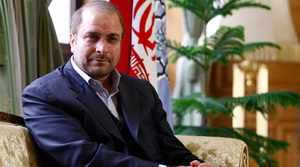
Mohammad Bagher Qalibaf
 |
|
Mohammad Bagher Ghalibaf iranmilitarynews. сom |
Mohammad-Bagher Qalibaf was born in 1340 by the Iranian calendar (1961/1962), in Mashhad in the North-East of Iran, 51 years old.
When Iran’s Islamic Revolution had ended, Qalibaf was 17 years old. In autumn 1980 he graduated from the School of Mathematics and voluntarily went to the front. At the age of 22, he took command of the division “Nasr” (Khorasan Province), which was part of the Islamic Revolutionary Guards Corps (IRGC).
At the conclusion of the Iranian-Iraqi war, Mohammad Qalibaf briefly served at “Hatem al-Anbiya “ military- engineering base.
Simultaneously with the service in the Revolutionary Guards, Qalibaf continued his studies at the University of Tehran. In 1994 he graduated from the Faculty of Political Science and in 2001 at the Pedagogical University of Tehran he received a doctorate in “political science.”
Till the end of June 2000, Qalibaf headed the Air Force of the Revolutionary Guards, and later became the Commander of the Law Enforcement Forces (Police) of Iran. In 2005, by the decree of the President of Iran, Qalibaf was appointed Special Representative and Head of Staff of Iran on struggle against goods and currency smuggle.
M.Qalibaf was one of 24 high-ranked Commanders of the IRGC, who in July 1999, wrote a letter to President M. Khatami demanding to solve the problem associated with demonstrations of students. Otherwise, the IRGC was ready to take responsibility for the consequences within the framework of its powers.
Under the leadership of Qalibaf, the Police were able to raise their credibility in the eyes of the population. The Commander of the Iranian Police Qalibaf is known in Iran also for his having deeply modernized and rebuilt the Police, having created a system of emergency response (110, an analogue of 02). People are grateful to him for the fact that during the students’ protests in 2003 no one was killed. However, on him is put responsibility for the persecution of journalists and intellectuals in Iran. Besides, M.Qalibaf managed to neutralize the influence of various political parties and factions on LEF.
The greatest attention in his election campaign M.Qalibaf pays to three major issues: economy, international relations and social issues. According to him, Iran’s economy is in stagnation, and taking into consideration the geographical location, the country is able to play a greater role in the region and the world at large. Qalibaf is sure that the accumulated social problems need to be solved immediately.
When Qalibaf was elected Mayor of Tehran, from the city was removed the notorious prison “Evin”. In its place there appeared a park area.
He also has created a website – www.ghalibaf.ir to communicate with voters.
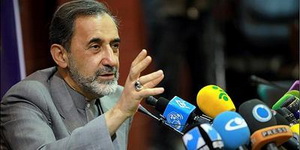
Dr. Ali Akbar Velayati
 |
|
Doctor Ali Akbar Velayati iranmilitarynews. сom |
Dr. Ali Akbar Velayati was born in 1945 in Shamiran, Tehran, 68 years old. Has higher education. He studied at privileged secondary schools of Tehran “Bahram”, “Nader Ashraf” and “Jam al-Golhak”.
In 1971 he graduated from the Medical Faculty of Pediatrics of Tehran University. In 1974, he studied at the Special Faculty of Infectious Diseases of the Medical Center. In 1977, for a year he studied in the United States, and received his doctorate at the department of infectious diseases. Professor, the Dean of the Faculty of Medicine.
After the victory of the Islamic Revolution in 1978, for some time he was in the Party of the Islamic Revolution, was elected a Deputy of the Majlis of the first convocation.
He has held the following positions:
- Deputy Minister of Health;
- Member of the Board of Directors of the Islamic Association of Doctors;
- Member of the Committee on Public Health
In 1981, he was appointed Minister of Foreign Affairs of Iran, at which post he had been during the whole war with Iraq and the economic blockade, i.e. for 16 years!
In 1997 he was appointed Advisor to the Supreme Leader of the Islamic Revolution on foreign policy. He is the oldest and most experienced diplomat of Iran. Velayati is a member of the Mediation Council of Iran and is considered a person of Ali Akbar Hashemi Rafsanjani. By the way, in the Presidential elections of 2005, he withdrew his candidacy in favor of Hashemi Rafsanjani, but, unfortunately, both of them lost the elections.
His English is fluent.
Among the radicals A.Velayati is believed to have a good chance in the elections and he has the advantage in matters of influence on the situation in the face of increasing international pressure on Iran. In fact, Velayati is a political figure, with an inherent position of a leader. He is well-perceived by radicals- traditionalists (Party “Hezb-e motalefe”, “Union of Combatant Clergy” and “Union of Theologians of the Qom Scientific Center”).
To this day, to some people in Iran, the name of Velayati associates with the murder on the 17th of September, 1992 of 4 leaders of the Iranian Kurdish movement in Berlin’s cafe “Mykonos”. For carrying out this action had voted several high-ranking officials, among them – the President Hashemi Rafsanjani, the Minister of Information (Intelligence) Ali Fallahiyan and Foreign Minister Velayati (although he denies). Despite this, Iranian analysts see him as a politician, able to overcome confronting Iran both, domestic and external problems. They believe that if he wins, Velayati will form a coalition government, which will include representatives of all groups and parties of Iran, some leading figures. And this government will lead the country out of a deep crisis. At the same time, Velayati has a certain authority among the young radical movements that are considered initiators of the latest changes in Iran and who are members of the “Council of Interaction of Forces of the Islamic Revolution”, namely – the “Union of the Followers of the Islamic Revolution.” He also has an influence on some members of the “Union for the Protection of Islamic Values.”
A strong politician, with great experience in political activities in Iran, he has very good chances to win. According to the Iranian political analyst, Professor Sadeq Zibakalam, on the list of candidates, Velayati is in the first place.
It should be noted that the Conservatives have repeatedly tried to enter a dialogue with the United States exactly through Velayati.
Ali Akbar Velayati has re-opened his website, closed after the 2005 elections.
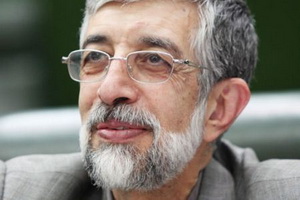
Dr. Gholam-Ali Haddad Adel
 |
|
Gholam-Ali Haddad Adel iranmilitarynews. сom |
Dr. Gholam-Ali Haddad-Adel was born in 1945, is 68, represents Radicals’ political bloc “Abadegaran.”
A member of Majlis from Tehran. He was a member of the Committee on Social Affairs, a member of the Mediation Council of Iran, a Professor of Philosophy and Literature at Tehran University, the Deputy Minister of Islamic Orientation, the leader of the seminar of Qom Theological Center.
He is an active supporter of the conservative wing of the Parliament, was a member of Majlis of the 6th convocation, a member of the Supreme Council of the Cultural Revolution, a member of the Supreme Council of the Organization of Culture and Islamic Relations.
For 10 years he had worked in the Ministry of Education, at the same time being a member of the Council of the Persian language and philology, is widely known as an active supporter of the struggle for the purity of the Persian language.
He is a relative of the Supreme Leader of the Islamic Revolution Ayatollah Ali Khamenei (according to the official information, Haddad Adel’s daughter married Ayatollah’s son – Modzhatba Khamenei) and is considered one of his closest allies and followers.
Has a scientific publication: 17 books, five scientific works on philosophy, religion and sociology, has published 190 articles on various subjects. He was a scientific adviser to 6 volumes of Encyclopedia of the Islamic world.
In 1989 he was awarded “The Book of the Year” prize.
Fluent in Arabic, French and English.
2. From the Ultra-Conservatives
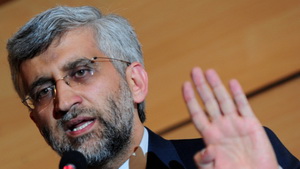
Saeed Jalili
 |
|
Saeed Jalili iranmilitarynews. сom |
Saeed Jalili was born on September 6, 1965 in the city of Mashhad, (48 years old).
Graduated from the “Imam Sadeq” University, Doctor of Political Sciences and Theology. After graduation till 1989 he was engaged in teaching.
Until 2005, he had served as Deputy Foreign Minister of Iran for the countries of Europe and America.
Since 2005 – Advisor to the President of Iran.
Since October 20, 2007 – Secretary of the Supreme National Security Council of Iran. He is considered a major figure in negotiations on the nuclear issue of Iran.
Veteran of IRGC, during the Iran-Iraq war of 1980-1988 he was seriously wounded and lost his right foot.
Fluent in English and Arabic.
A tough negotiator, uncompromising, highly respected defender of the interests of Iran. His intransigence and unwillingness to compromise leads Iran to confrontation. It is unlikely he will be President. This would be the worst option, worse than Ahmadinejad.
3. From Moderate Conservatives:
Mohsen Rezaei
 |
|
Mohsen Rezaei iranmilitarynews. сom |
Division General of IRGC Mohsen Rezai, a former Commander of the IRGC, the Secretary of the Mediation Council of Iran.
Was born in 1952 in Masjid – Soleiman (Khuzestan province), 61 years old. After leaving school in 1974, Rezaei entered Tehran University of Science and Industry. Has a degree in education and a degree in political science. During his studies, he was actively engaged in politics. Is one of the founders of the ” Organization of Mujahedeen’s of the Islamic Revolution.” The leader of the radical Islamic group “Ansar al-Hezbollah.”
Up to 1979, he had actively participated in the activities of “Melyal-e Islam” party. More than once he had been arrested by Shah’s regime for his political activities.
He took part in fighting in groups of the PLO “Fath”, led the military training of Iranian students in exile. Since February 1979 had been heading the department of Islamic propaganda of the Central Headquarters of the IRGC. From 1981 to 1997 (for 16 years) was the Commander of the IRGC.
At the conclusion of the Iran-Iraq war, he continued his studies and earned a doctorate in economics from the University of Tehran.
Enjoyed personal confidence of the Leader of the Islamic Revolution of IRI Imam Ruhollah Khomeini. During Rezai’s commanding, the IRGC had become a mighty combat-ready organization. He proved to be a skilled and experienced organizer of the population during the Iran-Iraq war.
He is a strong influential political figure. The only citizen of Iran, who three times has been awarded the gold medal “For Conquest”.
In the time of being the Commander of IRGC, Mohsen Rezai founded the “University of Imam Hussein,” “Bagiyatulla University of Medical Sciences” as well as the Faculty of Commandment of IRGC. In 1988/89 Rezai founded the military-engineering base “Hatem al-Anbiya ‘.
Having retired from the ranks of the IRGC, M.Rezai became a member of the “Assembly to Determine Benefits of the Regime” and headed its Commission on Macroeconomics.
Adheres to the extreme conservative views. Over the past few years his name have been mentioned several times in connection with the suppression of the students’ protests by militants from the “Ansar al-Hezbollah” organization.
At the moment he is the Secretary of the Mediation Council of Iran. Categorically denies being supported by the military, and not just by the IRGC. An active supporter of negotiations with the EU on the settlement of the “Iranian nuclear issue”, but at this he believes that Tehran makes “too many” concessions to the European Union.
He put forward his candidacy for the previous Presidential elections in 2005, but withdrew it on the eve of the elections in favor of Hashemi Rafsanjani, for which step he was called “Trojan horse of Hashemi Rafsanjani.” In the 2009 Presidential elections he did not participate. Maintains friendly relations with the former President Khatami.
There are some concerns that Western countries will not perceive him as the President of Iran, because once M.Rezai was accused of planning and carrying out the action of IRGC’s agents for destruction of the Jewish center in Buenos Aires in 1994. According to official information, Rezai is still on the “Red List” of Interpol.
On the 3d of January, 2013 in Zurich there was a meeting of Minister of Foreign Affairs of Argentina, Hector Timerman with the Iranian Foreign Minister Ali Akbar Salehi, during which the parties discussed the procedure of lifting the charges from M.Rezai for committed crimes. According to G.Timerman, the talks were “very productive.”
M.Rezai has his website, rezaee.ir and he works closely with the News Agency tabnak.ir
 |
|
Mohammad Gharazi ISNA |
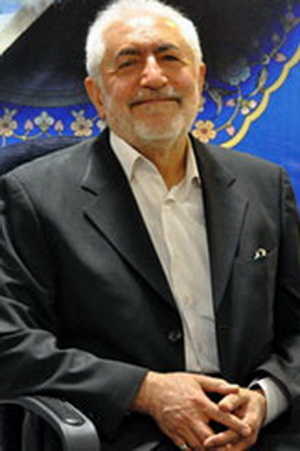
Mohammad Gharazi
He was born on October 5, 1941 in Isfahan. Was the Minister of Oil between 1981 and 1985, the Minister of Post from 1985 to 1997, a Deputy of the Iranian Parliament (Majlis) from 1980 to 1984.
4. From the Reformers:
Hassan Rowhani
 |
|
Hassan Rowhani ISNA |
Was born on November 12, 1948 in Sorhehe, not far from the city of Semnan. Holds the title of the Shiite modzhtahid (a man whose lead should be followed). He got primary religious education in the seminary of Semnan in 1960, in 1961 he moved to Qom to continue his religious education.
Member of the Assembly of Experts since 1999, a member of the Supervisory Board since 1991, Secretary of Supreme National Security Council from 1989 to 2005, the Head of the Center for Strategic Researches in 1992.
He was elected Deputy Speaker of the Iranian Majlis of the 4th and 5th convocations.
In 1969, he entered the Law Faculty of Tehran University and graduated from it in 1972, having got his Bachelor’s degree. Rowhani then entered the Caledonian University (Glasgow), where he studied public law. In the course of study at the university in turn gets the Master’s degree and a Doctorate in Law.
In 1965 he began his political activities in the group of Ayatollah A.Homeyni. Had been persecuted, and repeatedly arrested by the Shah’s regime. Was an active participant of the Islamic Revolution in Iran.
Had been repeatedly elected to the Majlis of Iran, a total of five convocations (20 years of Parliamentary activity!): The Head of the Committee on Defence (1st and 2nd convocations), Head of the Committee on Foreign Policy (4th and 5th convocations).
During the Iran-Iraq war, he held a number of important positions in the Armed Forces of Iran:
- 1982-1988 – member of the Supreme Defence Council;
- 1986-1988 – Member of the Supreme Council of support to the war, and led the Executive Committee;
- 1983-1985 – Deputy Commander of the Armed Forces of Iran;
- 1985-1988 – Head of the Operational Center “Hatem al-Anbiya of the Armed Forces of IRI ‘;
- 1986-1991 – Commander of the Air Defense;
- 1988-1989 – Deputy Commander In Chief of the Armed Forces of Iran. Has a state award.
- 1989-1997 – Advisor on Security issues to President Hashemi Rafsanjani, and from 2000 to 2005 – to President Khatami.
In Iran, Hassan Rowhani is called “Sheikh of diplomacy.”
From October 2003 to October 2007 he headed the group in the negotiations on the Iranian nuclear program.
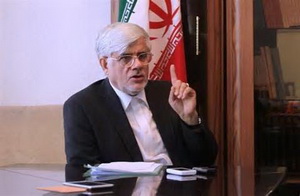
Mohammad Reza Aref
 |
|
Mohammad Reza Aref ISNA |
Was born in 1951 in Yazd. Academician, Professor of the “Sharif” Polytechnic University.
A Bachelor’s degree in electronics he got at Tehran University. Continued his education at Stanford University, got a Master’s degree in 1975 and doctorate in 1976.
Public service:
- Lecturer and Head of the Department of Isfahan Polytechnic University;
- 1994-1997 – Rector of the University of Tehran;
- 1997-2000 – Minister of Post, Telegraph and Telephone( later renamed the Ministry of Communications and Information Technologies);
- 2001-2005 – Vice-President in M.Khatami’s government.
Member of the Supervisory Board and Advisor to the Supreme Leader of Iran.
Radical changes due to the new President coming to office should not be expected. And then, we must understand that Iran is not an authoritarian state, it is in its own way quite democratic. Today the situation is such that the whole policy of Iran, all decisions are made in agreement – both, the “reformers” and “conservatives” of various streams come to a common agreement. If the new President does bring some changes, they will be tactical ones. Strategically Iran will retain all that there was before. Neither the nuclear program, relations with Israel and Syria nor Tehran’s policy in the region – it is impossible, in principle, to imagine that they will change dramatically.
Time will tell though.
|


